
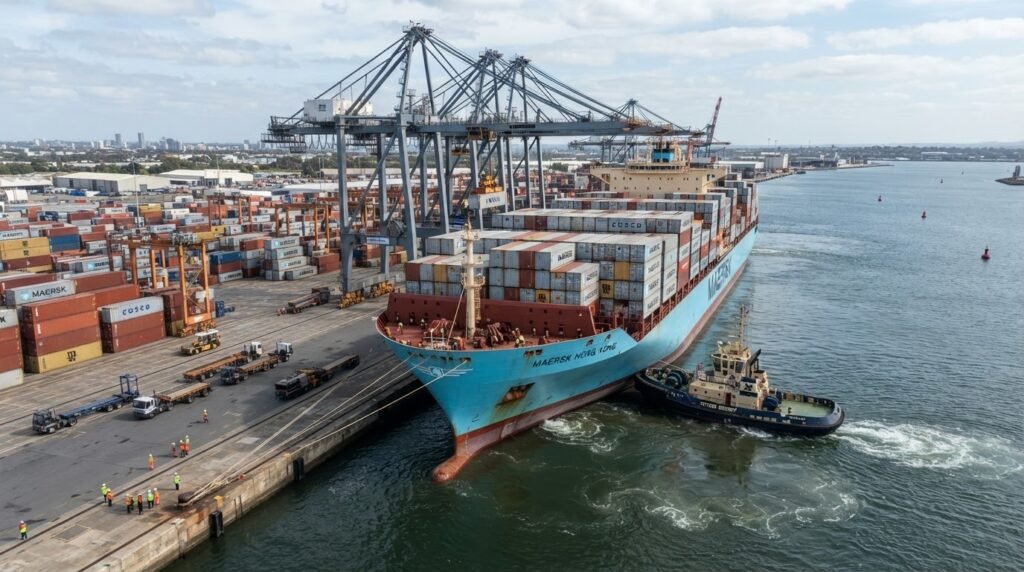
As the world’s largest archipelagic state, Indonesia occupies a uniquely strategic position in global maritime commerce. Strategically located between the Indian and Pacific Oceans and straddling the busiest shipping lanes in Asia—including the Malacca Strait—the nation handles over 90 percent of its international trade by sea. Historically, however, fragmented infrastructure, high logistics costs, and administrative bottlenecks hindered Indonesia from capitalizing on its full maritime potential. Today, under the umbrella of National Strategic Projects (PSN), Indonesia is executing an ambitious maritime transformation. By expanding deep-sea infrastructure, modernizing terminal operations, and implementing digital platforms, Indonesia is establishing world-class maritime gateways designed to attract direct foreign investment and seamlessly connect regional supply chains.
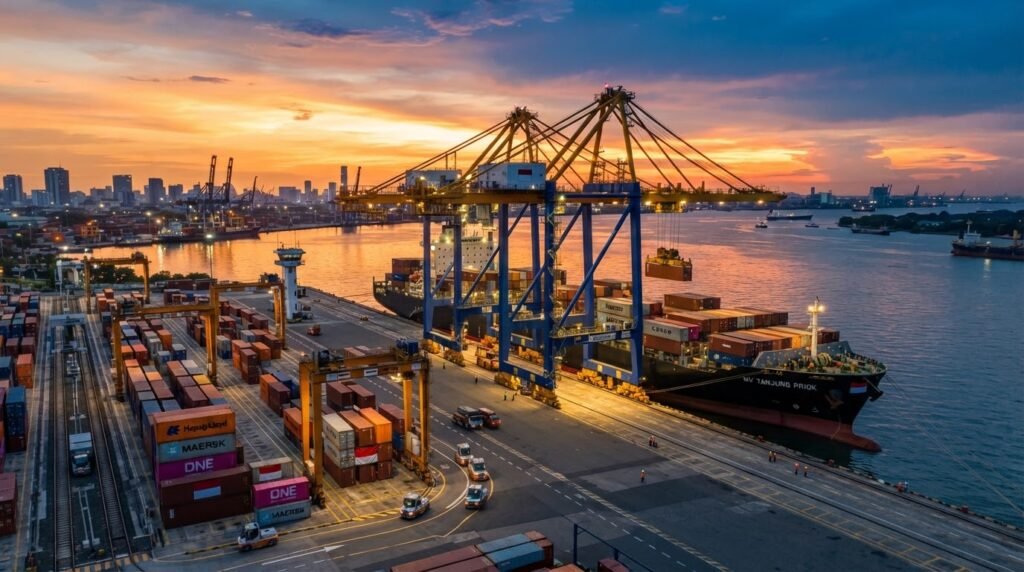
1. The Strategic imperative of Indonesia’s Maritime Transformation
For decades, Southeast Asian maritime logistics were dominated by traditional transshipment hubs like Singapore and Malaysia’s Port Klang. Indonesian ports historically suffered from high turnaround times, shallow draft depth incapable of accommodating large container ships, and congested hinterland connections. Consequently, a vast majority of Indonesian export goods had to be feeder-shipped to foreign transshipment hubs before reaching destination markets in Europe, East Asia, or North America. This extra leg added substantial logistics overhead and lengthened shipping schedules.
To address these systemic inefficiencies, the Indonesian government designated port development and maritime logistics modernization as primary components of its National Strategic Projects (PSN). By combining capital-intensive physical infrastructure upgrades with administrative policy reforms, the government aims to lower national logistics costs relative to Gross Domestic Product (GDP) and position key ports as direct global entry points.
2. Key Pillars of Port Modernization Under National Strategic Projects (PSN)
The modernization strategy centers on three interconnected pillars: physical capacity expansion, process digital transformation, and specialized trade infrastructure.
Physical Infrastructure and Deep-Sea Expansion
Modern mega-container vessels (such as Ultra Large Container Vessels, or ULCVs) demand deep-draft harbors, expansive berth spaces, and heavy-duty gantry cranes. Through key PSN initiatives, Indonesia is expanding facilities like Patimban Port in West Java and Kuala Tanjung in Sumatra, alongside major capacity additions at Tanjung Priok in Jakarta and Tanjung Perak in Surabaya. These deep-water developments allow large ocean liners to dock directly, eliminating reliance on intermediary ports.
To understand how these physical infrastructure developments position the nation to capture major Asian shipping routes, read our detailed analysis on [SPOKE_1_LINK: Deep-Sea Port Expansion: Positioning Indonesia as a Regional Transshipment Hub].
Digitalization via the National Logistics Ecosystem (NLE)
Physical expansion alone cannot resolve trade bottlenecks without streamlined administrative workflows. Historically, importers, exporters, and shipping lines faced fragmented clearance protocols across multiple ministries, customs offices, and port authorities. The introduction of the National Logistics Ecosystem (NLE) unifies these disparate processes into a single, digital platform.
By synchronizing vessel clearance, customs validation, quarantine checks, and inland transport booking, the NLE dramatically reduces container dwell times and operational costs. For an in-depth breakdown of how digital integration streamlines end-to-end maritime trade, see our dedicated guide on [SPOKE_2_LINK: Streamlining Port Infrastructure Under the National Logistics Ecosystem (NLE)].
Specialized Logistics and Value-Chain Integration
Modernization extends beyond standard dry container handling. To drive economic growth in rural and coastal regions, ports are increasingly building specialized facilities suited for temperature-sensitive cargoes, high-value agricultural commodities, and perishable marine products. Establishing integrated cold storage and refrigerated container yards directly at coastal terminals prevents post-harvest loss and ensures strict international compliance for high-value exports.
Discover how modern temperature-controlled infrastructure at maritime terminals is revitalizing regional economies in our comprehensive study on [SPOKE_3_LINK: Cold Chain Development at Key Maritime Terminals to Boost Seafood Exports].
3. Economic Impact and Global Investment Opportunities
The overhaul of Indonesia’s port network creates substantial economic multiplier effects across several key dimensions:
- Reduction in Logistics Overhead: Streamlined operations and reduced ship wait times directly improve business competitiveness by lowering inland transport and freight charges.
- Foreign Direct Investment (FDI): International terminal operators, logistics firms, and global manufacturers are investing heavily in port-adjacent Industrial Estates and Special Economic Zones (SEZs).
- Direct International Trade Routes: Establishing direct deep-sea calls reduces transit times for export goods, giving Indonesian products a competitive pricing edge in global markets.
- Regional Balanced Growth: Upgrading ports outside of main industrial hubs—particularly in Eastern Indonesia—distributes economic opportunities across islands.
4. Sustainability and Green Port Initiatives
As maritime trade volumes grow, sustainability has moved to the forefront of Indonesia’s port modernization policy. Environmental compliance and decarbonization are now central to port operations. Modernized terminals under the PSN framework are increasingly adopting “Green Port” standards, incorporating:
- Onshore Power Supply (Cold Ironing): Enabling docked ships to plug into land-based electrical grids, significantly cutting vessel diesel emissions while at berth.
- Electrified Equipment: Replacing traditional diesel-powered rubber-tired gantry (RTG) cranes with electrified alternatives (e-RTGs).
- Digital Energy Management Systems: Monitoring and optimizing real-time power distribution across container terminals to reduce carbon footprints.
5. Navigating the Future of Indonesian Maritime Commerce
Indonesia’s port modernization strategy under National Strategic Projects represents a paradigm shift in how the country interacts with global trade networks. By combining deep-water infrastructure expansion, digital harmonization via the National Logistics Ecosystem, and specialized logistics capabilities like cold chain integration, Indonesia is building a resilient, world-class maritime infrastructure. For international investors, shipping lines, and trade enterprises, these developments establish a reliable, efficient gateway to Southeast Asia’s largest economy.