
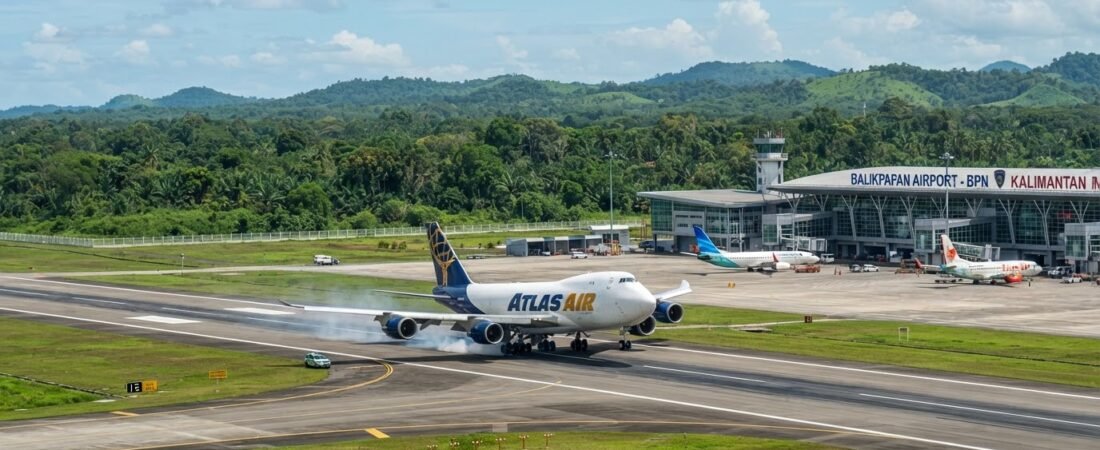
As Indonesia accelerates the development of Nusantara (Ibu Kota Nusantara or IKN) in East Kalimantan, creating a fast, reliable, and sustainable logistics backbone is critical to supporting its new role as the nation’s administrative center. While sea transport handles the heavy lifting of raw materials and bulk freight, air logistics serves as the rapid-response lifeline for high-value goods, pharmaceutical supplies, cold-chain perishables, and time-critical e-commerce operations across Eastern Indonesia.
However, developing air freight infrastructure in the 21st century requires a departure from traditional carbon-intensive models. Aligned with Nusantara’s master plan to become a carbon-neutral “Forest City” by 2045, East Kalimantan’s air cargo ecosystem is being built around the concept of eco-logistics nodes. Through strategic airport expansions, smart cargo terminal management, green building standards, and cold-chain integration, the region is achieving major infrastructure milestones that set a new benchmark for sustainable aviation logistics in Southeast Asia.
1. The Dual-Airport Strategy: Anchoring East Kalimantan’s Air Cargo Network
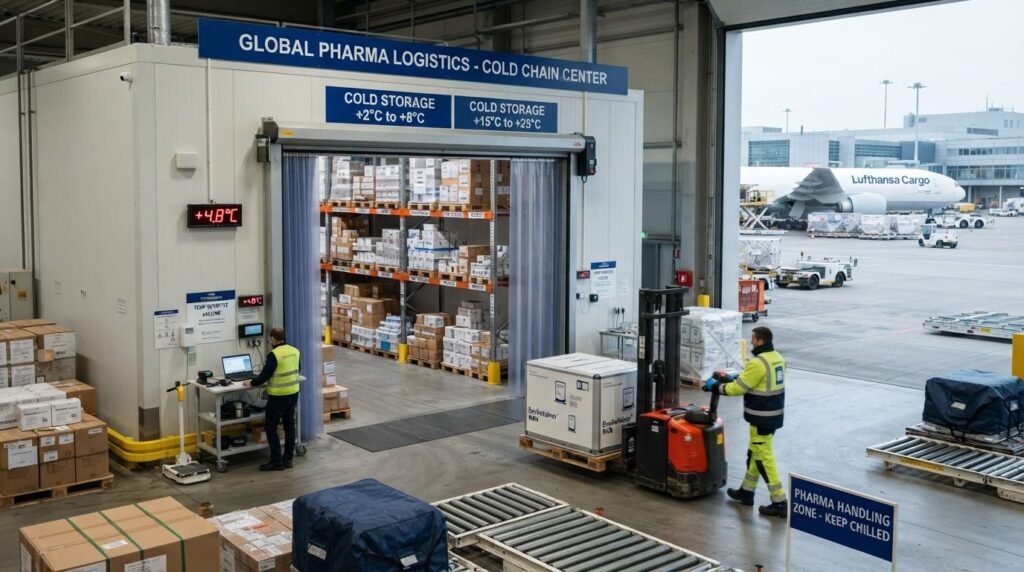
To ensure high operational redundancy, capacity, and speed, the air logistics architecture for IKN relies on a dual-airport ecosystem combining established regional aviation hubs with purpose-built administrative and cargo facilities.
The primary heavy air cargo gateway remains Sultan Aji Muhammad Sulaiman (SAMS) Sepinggan International Airport in Balikpapan. Positioned just south of the new capital, SAMS Sepinggan is undergoing extensive freight terminal upgrades to expand its cargo handling footprint, lengthen runway capacity for wide-body freighters (such as Boeing 777F and Airbus A330F), and streamline air-to-land intermodal transfers.
Complementing Balikpapan is the newly developed Nusantara International Airport (IKN VVIP/VIP & Logistics Airport), located directly near the Core Government Area (KIPP) in Penajam Paser Utara. Designed specifically with low-noise, energy-efficient infrastructure, this facility caters to high-priority government logistics, urgent medical supplies, and high-value cargo requiring immediate access to the administrative district.
Strategic Functions of the Dual-Airport Hub:
- SAMS Sepinggan (Balikpapan): Handles high-volume commercial air cargo, heavy e-commerce distribution, regional feeder air freight, and international cargo connections.
- Nusantara International Airport (IKN): Facilitates express air delivery, emergency cold-chain healthcare logistics, and high-security administrative freight.
- Aji Pangeran Tumenggung (APT) Pranoto Airport (Samarinda): Acts as a secondary feeder node supporting northern East Kalimantan’s intra-island cargo demand.
This article is part of our dedicated topic cluster on regional infrastructure transformation. Read our parent hub guide to see the complete macro picture:
Building the Future: How Nusantara Capital Reshapes Regional Supply Chains.
2. Eco-Logistics Milestones: Building Carbon-Neutral Air Freight Hubs
The defining feature of East Kalimantan’s expanding air freight infrastructure is its strict adherence to green development mandates. Cargo terminals are no longer viewed merely as industrial warehouses; they are engineered as self-sustaining, low-emission eco-logistics nodes.
Major infrastructure milestones across Balikpapan and IKN air cargo terminals include the installation of extensive rooftop solar PV arrays to power climate-controlled storage areas, rainwater harvesting systems for facility maintenance, and advanced building energy management systems (BEMS) that minimize cooling loss in tropical conditions.
| Eco-Logistics Milestone | Key Infrastructure Technology | Environmental & Operational Impact |
|---|---|---|
| Green Building Certification | EDGE & GREENSHIP certified cargo terminal design | 30–40% reduction in facility energy and water consumption |
| Solar Energy Integration | Rooftop solar PV arrays on freight handling warehouses | Off-sets peak daytime electricity demand for cold storage units |
| Ground Fleet Electrification | Electric Ground Support Equipment (e-GSE) & EV tuggers | Zero direct tailpipe emissions during aircraft loading and tarmac operations |
| Digital Paperless Cargo | IATA e-Freight & automated customs processing | Eliminates paper documentation and speeds up import/export clearance times |
3. Advancing Cold-Chain Infrastructure for Perishables and Healthcare
As the population of Nusantara grows—encompassing government officials, foreign diplomats, technology workers, and construction personnel—the demand for temperature-sensitive supply chains has surged. Air freight is the indispensable link for maintaining uninterrupted cold chains across the Indonesian archipelago.
To address this demand, air cargo terminals in Balikpapan and IKN are deploying state-of-the-art cold-chain facilities. These include multi-temperature zone warehouses ranging from deep-freeze (-25°C) for pharmaceuticals and vaccines to controlled chilled zones (2°C to 8°C) for fresh produce, dairy, and high-end seafood exports.
Key Innovations in Local Cold-Chain Air Freight:
- IoT Real-Time Temperature Monitoring: Smart sensors track thermal conditions continuously from aircraft unload to warehouse storage, preventing shipment spoilage.
- Automated Cool Dollies: Temperature-controlled apron transfer containers protect sensitive cargo from ambient tropical heat during tarmac transit.
- Direct Agriculture Pipelines: Enables local agricultural and aquaculture producers in East Kalimantan to ship high-freshness products directly to major Asian consumer hubs.
4. Smart Freight Handling and Automated Customs Integration
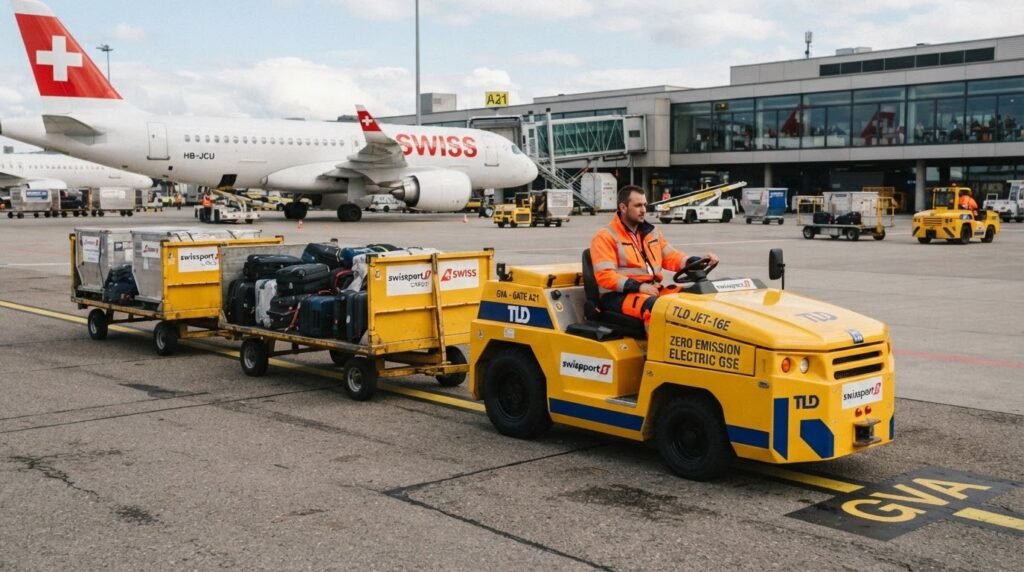
Speed is the primary value proposition of air freight. To prevent terminal bottlenecks from offsetting flight speed, East Kalimantan’s eco-logistics nodes are incorporating advanced automation and digital customs processing.
In partnership with Indonesian Customs (Bea Cukai) and national logistics platforms, cargo facilities at SAMS Sepinggan and IKN utilize automated Optical Character Recognition (OCR) gates, automated storage and retrieval systems (ASRS), and pre-arrival digital customs clearance. By digitizing manifest verification, average cargo dwell times at airport facilities have been reduced from days to just hours.
Discover how air freight links with maritime shipping networks and sustainable industrial real estate in East Kalimantan:
5. Multimodal Connections: Bridging Air Cargo to Land and Sea
An air freight node cannot function in isolation. The true efficiency of East Kalimantan’s air cargo infrastructure relies on its seamless integration with terrestrial highways and nearby maritime ports.
The Balikpapan-Samarinda (Balsam) Toll Road acts as the primary overland artery, allowing air cargo arriving at SAMS Sepinggan Airport to reach the IKN core administrative zone within 45 to 60 minutes. Furthermore, dedicated logistics corridors link airport cargo zones directly to the Kariangau Seaport, enabling efficient sea-to-air or air-to-sea transshipment models for regional distributors operating across the BIMP-EAGA (Brunei-Indonesia-Malaysia-Philippines East ASEAN Growth Area) region.
6. Commercial Opportunities for E-Commerce and Express Logistics Operators
The evolution of East Kalimantan into a premier eco-logistics air hub creates substantial commercial opportunities for express integrators (e.g., DHL, FedEx, J&T, Pos Indonesia), third-party logistics (3PL) providers, and regional e-commerce platforms.
Establishing an early operational footprint in Balikpapan or the IKN logistics zone allows express logistics firms to capture market share in a rapidly expanding consumer market. Furthermore, as multinational corporations establish regional headquarters in Nusantara, demand for high-reliability, ESG-compliant air freight services will experience steady exponential growth.
Strategic Playbook for Aviation and Logistics Investors:
- Lease Eco-Certified Cargo Space: Secure warehouse footprint in LEED/GREENSHIP certified facilities to meet corporate decarbonization goals.
- Invest in Temperature-Controlled Assets: Partner with local operators to expand specialized cold-storage units and refrigerated transport fleets.
- Leverage Regional Feeder Routes: Utilize East Kalimantan as a central sorting hub for secondary distribution across Central and Eastern Indonesian provinces.
Conclusion: Setting a Green Standard for Regional Aviation Logistics
The rapid transformation of East Kalimantan’s air freight infrastructure represents a cornerstone of Nusantara’s economic vision. By combining dual-airport capacity with eco-friendly facility design, advanced cold-chain technology, and seamless multimodal connections, Indonesia is creating a world-class air logistics network.
As these infrastructure milestones come online, Nusantara’s eco-logistics nodes will not only power the new capital’s growth, but will also reposition Eastern Indonesia as a major, high-speed trade bridge within Southeast Asia and the global supply chain network.