
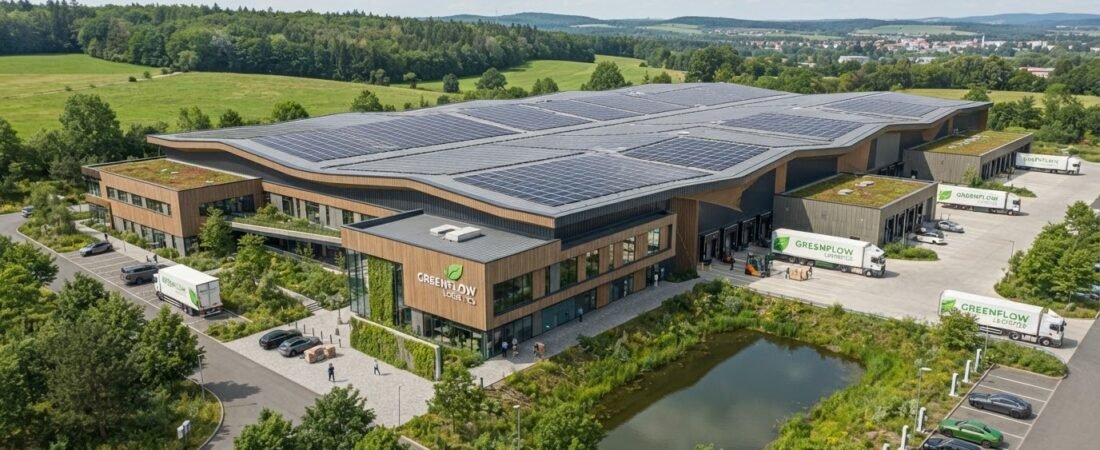
The relocation of Indonesia’s capital city to Nusantara (Ibu Kota Nusantara or IKN) in East Kalimantan is driving a massive structural transformation in the nation’s commercial real estate and industrial logistics sectors. Engineered from the ground up to be a net-zero carbon city by 2045, Nusantara operates under strict sustainability mandates that extend far beyond administrative buildings. The entire industrial and distribution footprint supporting the new capital must align with high environmental, social, and governance (ESG) standards.
This mandate has sparked a high-growth market for green warehousing and sustainable industrial real estate across the Balikpapan-IKN-Samarinda economic triangle. Traditional, energy-intensive logistics facilities are rapidly giving way to eco-certified distribution centers, solar-powered fulfillment hubs, and smart industrial parks. For institutional real estate investors, logistics developers, and third-party logistics (3PL) providers, East Kalimantan offers an unprecedented commercial entry point into Southeast Asia’s emerging eco-logistics market.
1. The Shift Toward Eco-Certified Industrial Real Estate in East Kalimantan
Historically, industrial warehousing across Indonesia suffered from high grid energy reliance, poor thermal insulation, inefficient water utilization, and minimal waste management integration. In a tropical climate like East Kalimantan, traditional warehouse structures incur extreme operational expenditures (OpEx) solely to power industrial air conditioning and refrigeration systems.
Under Nusantara’s urban development guidelines, future-proof logistics properties are built around green building certifications such as GREENSHIP (by the Green Building Council Indonesia) or international standards like LEED (Leadership in Energy and Environmental Design) and EDGE (Excellence in Design for Greater Efficiencies).
Core Pillars of Green Warehouse Construction in the IKN Cluster:
- Thermal Efficiency & Insulation: High-performance roof insulation, reflective coatings, and natural ventilation louvers that dramatically reduce internal temperatures without excessive HVAC usage.
- Renewable Energy Generation: On-site rooftop solar photovoltaic (PV) installations capable of supplying 30% to 100% of daytime operational electricity needs.
- Resource Conservation: Integrated rainwater harvesting systems, greywater recycling, and low-flow plumbing fixtures that minimize municipal water draw.
- Sustainable Materiality: Utilization of locally sourced, low-embodied-carbon construction materials and recycled structural steel.
This article is a core pillar of our regional infrastructure research cluster. To see how green real estate fits into the broader macroeconomic transition, read our main hub:
Building the Future: How Nusantara Capital Reshapes Regional Supply Chains.
2. Prime Investment Corridors for Green Logistics Real Estate
Demand for modern warehousing space in East Kalimantan is concentrated along key multimodal transit corridors that connect deep-water seaports, international airports, and the core administrative zone of IKN.
Real estate developers and logistics operators are focusing capital deployment across three primary investment nodes:
| Logistics Node Corridor | Primary Strategic Function | Dominant Warehouse Typologies |
|---|---|---|
| Kariangau Industrial Zone (Balikpapan) | Direct sea-port connectivity, heavy manufacturing & bulk import staging | Bonded Logistics Centers (PLB), heavy-duty breakbulk storage, deep-water port warehouses |
| Balikpapan-Samarinda (Balsam) Expressway Corridor | Rapid terrestrial transit linking air hubs directly to the core capital zone | High-spec urban distribution hubs, e-commerce fulfillment centers, regional 3PL hubs |
| KIPP Peripheral Logistics Zone (Penajam Paser Utara) | Last-mile urban delivery servicing Nusantara’s government and residential districts | Micro-fulfillment hubs, cold-chain fulfillment facilities, zero-emission fleet depots |
3. Technological Integration: Smart Warehouse Management Systems (WMS)
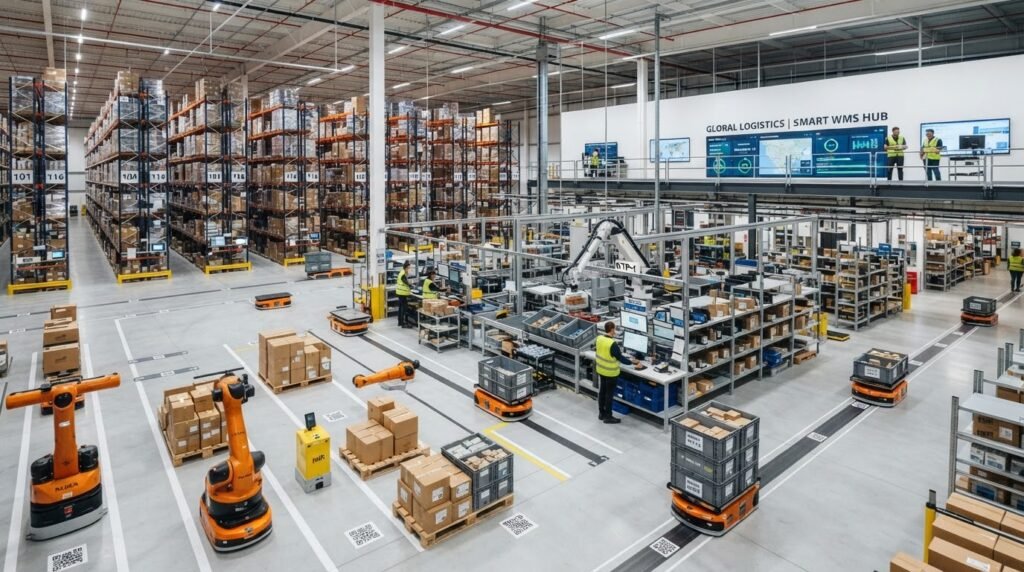
Physical sustainability in modern warehousing must be paired with digital intelligence. In the IKN market, green facilities are being paired with advanced Smart Warehouse Management Systems (WMS) and Internet of Things (IoT) infrastructure to optimize both operational productivity and energy utilization.
IoT sensor networks automatically adjust warehouse lighting based on ambient sunlight, track real-time energy usage patterns across individual loading bays, and optimize HVAC operations based on occupancy. On the operational side, automated storage and retrieval systems (ASRS) and AGVs (Automated Guided Vehicles) cut floor space requirements, allowing developers to build higher vertical footprints that reduce total land grading and environmental disruption.
Key Benefits of Smart Green Warehousing:
- Reduced Operational Costs: Lower utility bills yield a direct reduction in long-term facility overhead for commercial tenants.
- Higher Asset Valuations: Eco-certified, tech-enabled properties command premium rental rates and enjoy higher occupancy stability from blue-chip corporate tenants.
- Streamlined Regulatory Approvals: Fast-tracked permitting and tax incentives offered by the Nusantara Capital City Authority (OIKN) for green-certified facilities.
Sustainable warehousing relies directly on surrounding transport networks. Read how maritime routes and air freight hubs support eco-warehousing:
4. Cold-Chain Warehousing: The High-Yield Frontier
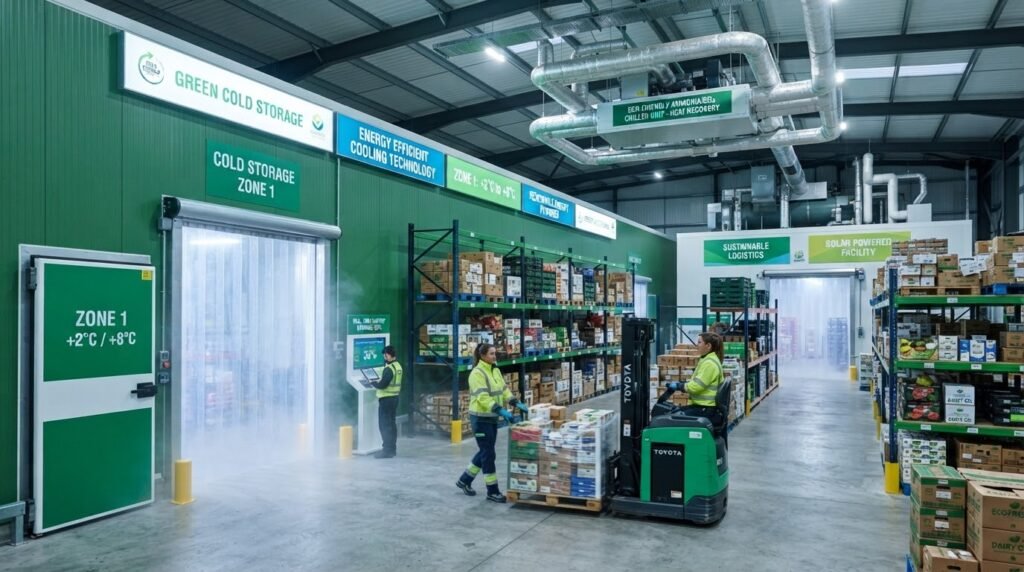
Perhaps the most immediate high-yield opportunity within East Kalimantan’s green real estate sector lies in temperature-controlled logistics and cold storage. As Nusantara’s population scales toward hundreds of thousands of residents, maintaining an uninterrupted food supply chain for fresh produce, meats, dairy, and pharmaceuticals is paramount.
Cold storage is notoriously energy-intensive, making traditional cold stores unsuitable under IKN’s strict sustainability rules. Next-generation green cold warehouses in East Kalimantan incorporate thermal energy storage (TES) systems, natural refrigerants (such as CO2 and ammonia systems with ultra-low Global Warming Potential), and dedicated rooftop solar generation to offset heavy daytime refrigeration loads.
5. Investor Playbook: Navigating Regulatory Frameworks and Incentives
The Indonesian government and the Nusantara Capital City Authority (OIKN) have introduced attractive fiscal and non-fiscal incentives to draw private domestic and foreign direct investment (FDI) into the new capital’s infrastructure ecosystem.
For industrial real estate developers, logistics funds, and Real Estate Investment Trusts (REITs), capital deployment in Nusantara green warehousing is backed by several regulatory catalysts:
- Tax Holidays & Concessions: Corporate income tax reductions up to 100% for pioneer infrastructure and logistics developers committing capital inside the IKN zone.
- Extended Land Rights (HGB): Secure, long-term Right to Build (Hak Guna Bangunan) titles providing land tenure security up to 80–95 years for qualified industrial developments.
- Import Duty Exemptions: Tariff exemptions on imported capital goods, specialized green building technologies, and automation machinery.
Conclusion: Capitalizing on the Eco-Logistics Real Estate Boom
The convergence of a brand-new administrative capital, stringent ESG mandates, and expanding regional trade corridors along the Makassar Strait has created an extraordinary investment climate for green warehousing in East Kalimantan.
By investing early in eco-certified, smart, and energy-efficient logistics real estate, developers and institutional investors not only position themselves to capture high commercial yields from long-term corporate leases, but also anchor themselves as essential catalysts in the creation of Southeast Asia’s most sustainable capital city.