
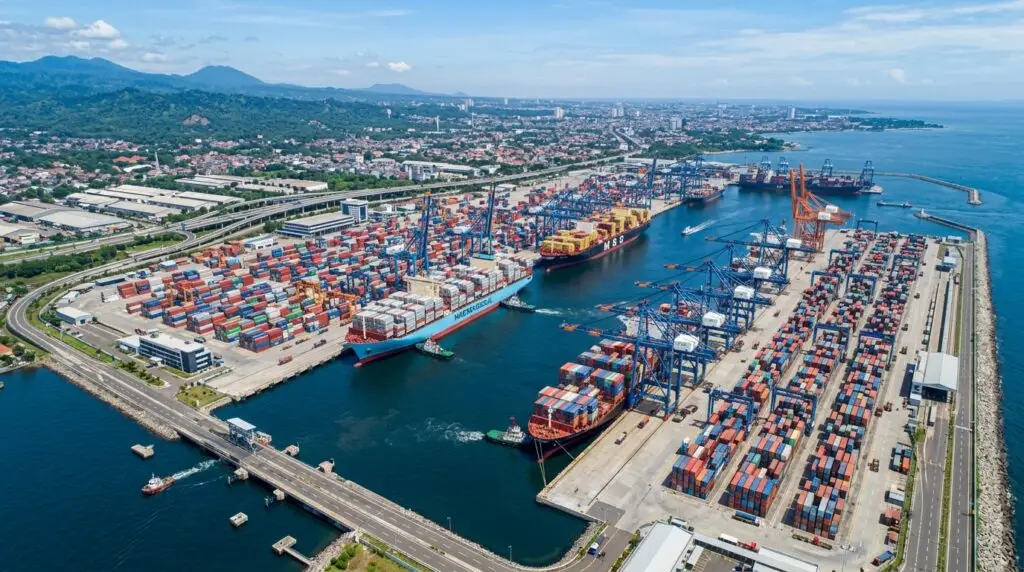
For decades, global ocean liner routes passing through Southeast Asia have relied heavily on established transshipment hubs in neighboring nations. Despite holding a central position along primary international trade corridors—most notably the Strait of Malacca, through which roughly a quarter of global sea-borne trade passes—Indonesia historically transshipped a massive volume of its international cargo through foreign ports like Singapore and Port Klang. This operational reliance added feeder transport costs, extended delivery timelines for local exporters, and resulted in lost revenue opportunities for the national maritime economy. To rectify this structural dependency, Indonesia’s strategic development plans have prioritized deep-sea port expansion as a core element of its infrastructure strategy.
By deepening channel access, modernizing berth facilities, installing high-capacity quay cranes, and constructing dedicated deep-water terminals such as the Patimban Port complex and expanded terminals at Tanjung Priok and New Makassar Port, the nation is steadily establishing direct mainline shipping routes. This comprehensive expansion enables ultra-large container vessels (ULCVs) to berth directly at Indonesian gateways. Consequently, deep-sea port expansion is fundamentally altering regional shipping dynamics, lowering international freight expenditures, and positioning Indonesia as an independent regional transshipment hub in Southeast Asia.
The Mechanics of Transshipment and Deep-Sea Requirements
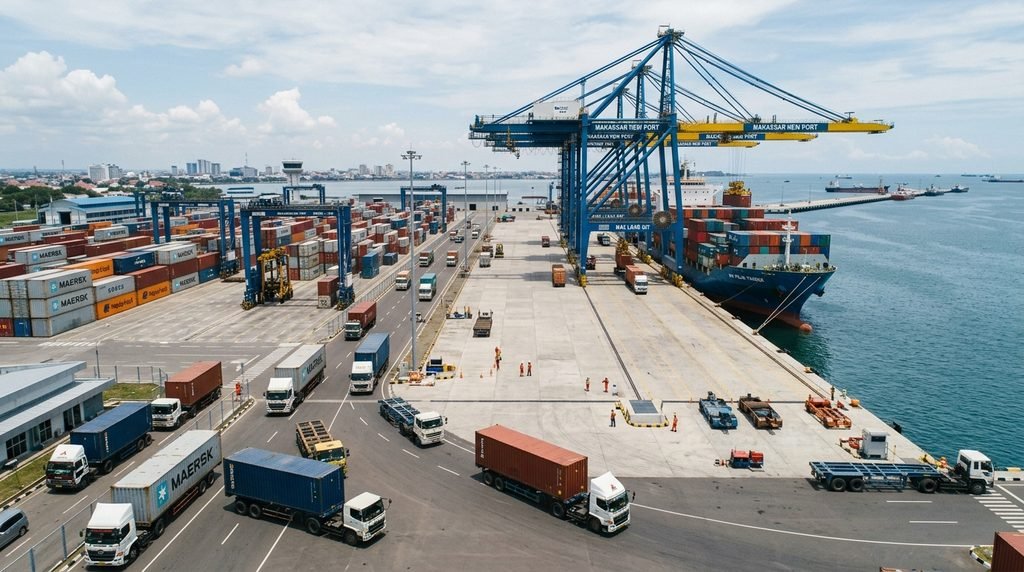
To understand the strategic necessity of deep-sea port expansion, it is essential to analyze the logistics dynamics of modern container shipping. Ocean carriers continuously seek economies of scale by deploying increasingly larger vessels. Modern mega-container ships can carry upwards of 18,000 to 24,000 Twenty-Foot Equivalent Units (TEUs). However, operating these massive vessels requires ultra-deep drafts, expansive turning basins, and specialized terminal infrastructure.
Standard regional ports with draft depths under 12 to 14 meters are physically unable to accommodate fully laden mainline container ships. As a result, cargo originating from or destined for these shallower ports must be carried by smaller “feeder” vessels to a central transshipment port. At the transshipment hub, containers are unloaded, organized, and reloaded onto large international vessel liners. Historically, Indonesia functioned predominantly as a feeder network, sending domestic cargo to foreign transshipment centers before it reached major markets in Europe, North America, or East Asia.
To understand how deep-sea port capacity fits into the broader national strategy for infrastructure modernization and global investment, read our core overview on Modernizing Indonesia’s Ports: Gateways for Global Trade and Investment.
Key Infrastructure Requirements for Transshipment Status
Transitioning from a feeder-dependent market into a self-sustaining regional transshipment hub requires overcoming strict physical and operational hurdles. Key infrastructural upgrades include:
- Draft Depth Expansion: Dredging access channels and harbor basins to depths exceeding 16 to 18 meters to safely accommodate deep-draft mainline vessels at all tide levels.
- Super Post-Panamax Cranes: Installing ship-to-shore (STS) quay cranes with extended reach capacity capable of handling container stacks spanning 22 to 24 rows wide across large hulls.
- Expanded Container Yard Capacity: Developing automated container storage yards equipped with high-density stacking systems and advanced Terminal Operating Systems (TOS) to ensure rapid container movement and low dwell times.
- Integrated Bunkering and Ship Repair Facilities: Providing auxiliary maritime services, including LNG and low-sulfur marine fueling, vessel maintenance, and freshwater supply to attract long-haul ocean carriers.
Strategic Deep-Sea Port Developments Across Indonesia
Indonesia’s targeted deep-sea infrastructure initiatives are strategically distributed across key geographic maritime choke points to capture diverse international trade flows and balance regional economic growth.
| Port Terminal Facility | Geographic Strategic Location | Targeted Draft Depth | Primary Operational Strategic Focus |
|---|---|---|---|
| Patimban Port Development | Subang, West Java (Java Sea) | 14.0m to 16.0m+ | Automotive exports, industrial containerized goods, and heavy manufacturing shipping |
| Kalibaru / New Tanjung Priok | Jakarta (Sunda Strait access) | 16.0m to 20.0m | Primary international container gateway, direct transshipment, and mainline Europe/US routes |
| New Makassar Port (MNT) | South Sulawesi (ALKI II route) | 16.0m | Eastern Indonesia transshipment hub, raw material export, and inter-island consolidation |
| Kuala Tanjung Port | North Sumatra (Malacca Strait) | 16.0m to 17.0m | Industrial park integration, agricultural exports, and Malacca Strait cargo capture |
1. Patimban Port: Transforming West Java’s Industrial Corridor
Located in Subang, West Java, Patimban Port serves as a critical deep-sea facility designed to alleviate heavy congestion at Jakarta’s primary port while offering direct export capabilities for Java’s manufacturing belt. Specifically designed with dedicated car terminals and deep-water container berths, Patimban reduces road transport friction and logistics overhead for automotive manufacturers, heavy industries, and electronics exporters across West Java.
2. New Tanjung Priok (Kalibaru Expansion): Upgrading the Primary Gateway
As Indonesia’s busiest port complex, Tanjung Priok underwent major structural expansion through the Kalibaru development project. By constructing deep-water mega-terminals with draft depths reaching up to 16 meters and beyond, the facility can host large container ships that previously bypassed Indonesia altogether. Direct service routes connecting Jakarta to major foreign destinations have steadily reduced transit times and eliminated foreign feeder fees.
3. Makassar New Port: Gateway to Eastern Indonesia and ALKI II
Strategically positioned along the Indonesian Archipelagic Sea Lane II (ALKI II)—a vital maritime corridor passing through the Lombok and Makassar Straits—Makassar New Port serves as the primary transshipment anchor for eastern Indonesia. Developing deep-sea capacity in Makassar allows regional goods from Sulawesi, Maluku, and Papua to be consolidated locally before direct shipment abroad, bypassing the need to route cargo through Java.
Economic Benefits of Direct Mainline Connections
Establishing direct ocean routes and deep-sea transshipment capacity generates tangible economic advantages across national supply chains and macro-economic metrics:
Reduction in Total Freight Costs and Lead Times
Bypassing regional feeder ports directly lowers ocean transport expenses. Exporters save on double-handling fees, local terminal handling charges at foreign ports, and feeder freight markups. Additionally, eliminating intermediate transshipment stops reduces international shipment lead times by several days, enhancing the supply chain reliability of Indonesian products in competitive overseas markets.
Retention of Maritime Service Revenues
When domestic cargo is transshipped through foreign hubs, transshipment fees, terminal handling charges, vessel bunkering revenues, and logistics service profits flow to overseas operators. Developing domestic deep-sea capacity retains these high-value maritime services within the national ecosystem, boosting domestic tax revenues and creating specialized maritime jobs.
Attraction of Foreign Direct Investment (FDI)
Global manufacturing firms evaluate logistics access when choosing production destinations. Industrial parks connected directly to deep-water ports with direct mainline shipping services present a highly attractive operating environment. This connection accelerates foreign direct investment in downstream industrial processing, machinery manufacturing, and assembly plants.
Challenges in Achieving Regional Transshipment Leadership
While physical infrastructure expansion has progressed significantly, establishing a world-class regional transshipment hub requires addressing several ongoing structural challenges:
- Vessel Call Frequency and Shipping Line Commitments: Securing long-term commitments from major global ocean alliances (such as 2M, Ocean Alliance, and THE Alliance) to adjust existing trade routes and schedule regular mainline calls at Indonesian ports.
- Balance of Trade Flows: Ensuring balanced two-way trade volumes. Transshipment hubs rely on balanced inbound and outbound container flows to optimize container reuse and ship load factors.
- Hinterland Intermodal Integration: Modernizing hinterland transport links—such as direct freight rail connections and dedicated port access toll roads—to prevent landside congestion from bottlenecking terminal operations.
- Regulatory and Customs Efficiency: Maintaining seamless, digitized, and rapid customs clearance protocols for transshipment cargo to match the high-speed operational turnarounds offered by rival regional hubs.
Conclusion
Deep-sea port expansion is fundamentally transforming Indonesia from a feeder-dependent maritime nation into an active regional transshipment contender. By constructing deep-draft berths, installing advanced cargo-handling equipment, and strategically leveraging its positioning along major sea lanes like ALKI II and the Malacca Strait, Indonesia is establishing direct trade connections to global markets. As these deep-water facilities reach full operational capacity, the nation is set to significantly reduce national shipping costs, retain high-value maritime revenues, and reinforce its position as a central economic engine in the Indo-Pacific region.
One Comment