
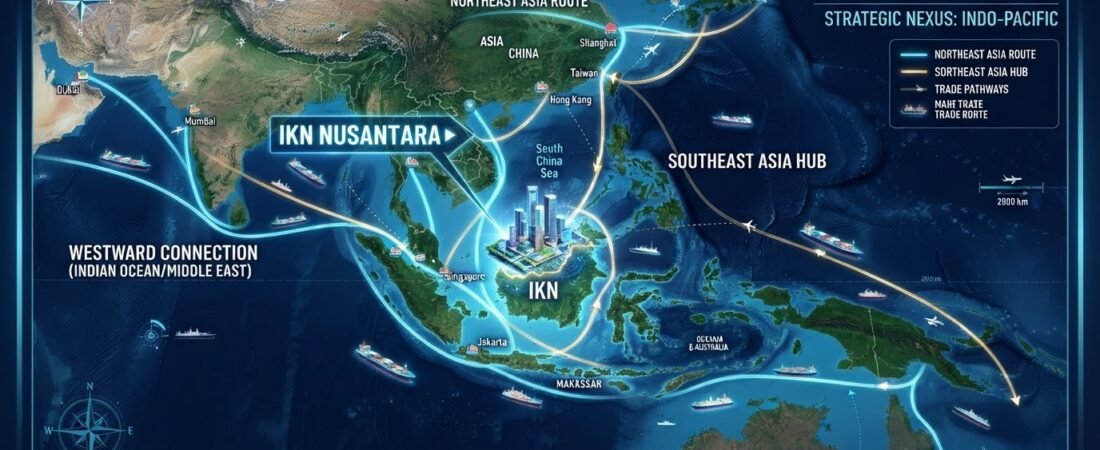
The relocation of Indonesia’s administrative capital from Jakarta to Nusantara (Ibu Kota Nusantara or IKN) in East Kalimantan marks one of the most ambitious megaprojects in Southeast Asian history. Beyond its administrative and political significance, IKN represents a fundamental structural pivot in East Asia’s economic geography. For decades, Indonesia’s industrial output, trade infrastructure, and logistics density were overwhelmingly concentrated on the island of Java—creating severe supply chain bottlenecks, land scarcity, and regional economic disparities.
The emergence of Nusantara in East Kalimantan shifts the nation’s economic center of gravity directly onto the Makassar Strait, a critical international maritime corridor. This repositioning is not merely a spatial reallocation of government buildings; it is a catalyst reshaping the entirety of East Indonesia’s supply chain infrastructure. From green warehousing corridors and multimodal logistics hubs to expanded deep-water ports and eco-certified air freight terminals, Nusantara is laying the groundwork for a resilient, sustainable, and hyper-connected regional trade ecosystem.
1. The Strategic Shift: Moving the Economic Pivot to East Indonesia
Historically, Java accounted for more than 50% of Indonesia’s Gross Domestic Product (GDP) and nearly 60% of its population. This spatial imbalance created significant logistics friction. Goods destined for Eastern Indonesian territories—such as Sulawesi, Maluku, and Papua—frequently required transit through Java’s overcrowded hubs, adding unnecessary sea miles, transit time, and freight costs.
By positioning the new capital city in Penajam Paser Utara and Kutai Kartanegara, Indonesia is establishing a direct economic anchor in the geographic center of the archipelago. Nusantara serves as a regional growth engine designed to decentralize supply networks, streamline inter-island commerce, and attract foreign direct investment (FDI) into Eastern Indonesia’s rich logistics, manufacturing, and renewable energy sectors.
Key Drivers of the Logistics Transition:
- Geographic Centrality: Direct proximity to high-growth markets in Eastern Indonesia and ASEAN trade partners.
- Congestion Mitigation: Relieving pressure on Java’s overburdened highways, seaports, and industrial zones.
- Resource-to-Market Efficiency: Direct access to East Kalimantan’s vast natural resources, enabling localized processing and direct export pipelines.
2. Maritime Connectivity and the Makassar Strait Maritime Corridor
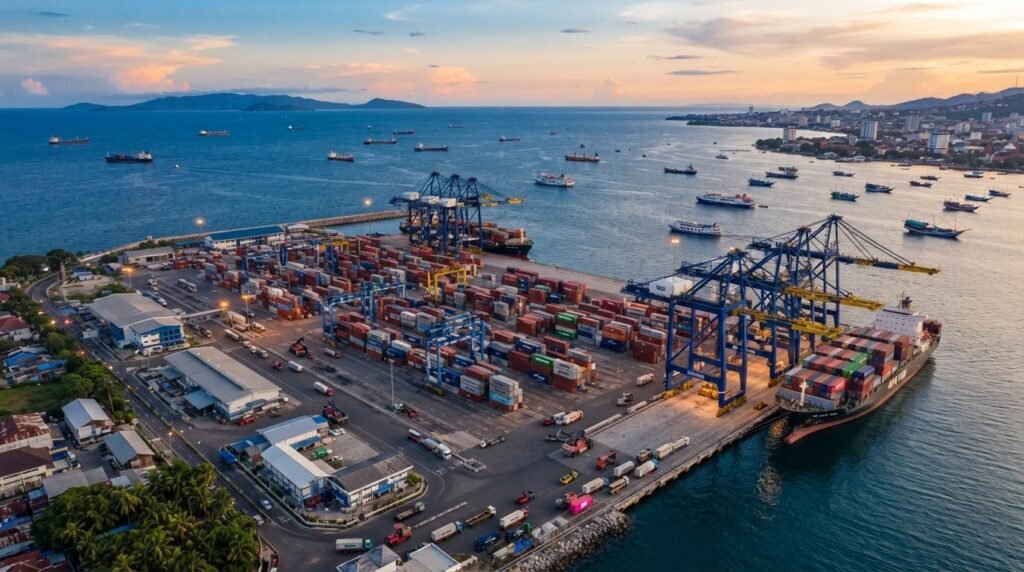
At the core of IKN’s logistics overhaul is its position along the **ALKI II (Archipelagic Sea Lanes of Indonesia II)** corridor through the Makassar Strait. Serving as an alternative deep-water route to the congested Malacca Strait, ALKI II is a critical passage for international maritime freight, particularly for Capesize vessels moving between Australia, East Asia, and the Pacific.
To fully capitalize on this strategic waterway, Indonesia is modernizing its port infrastructure in East Kalimantan. Seaports such as Kariangau (Balikpapan) and Palaran (Samarinda) are being transformed into high-efficiency maritime gateways equipped with automated container handling, digital customs clearing, and expanded berth capacities. These upgrades ensure that heavy machinery, construction raw materials, and high-volume consumer goods move seamlessly into the capital region while establishing direct shipping links to major global markets.
To dive deeper into sea route integration, port expansions, and international shipping lanes, read our comprehensive analysis:
Maritime Connectivity: Connecting IKN to Global Shipping Routes via the Makassar Strait.
3. Air Freight & Eco-Logistics Nodes in East Kalimantan
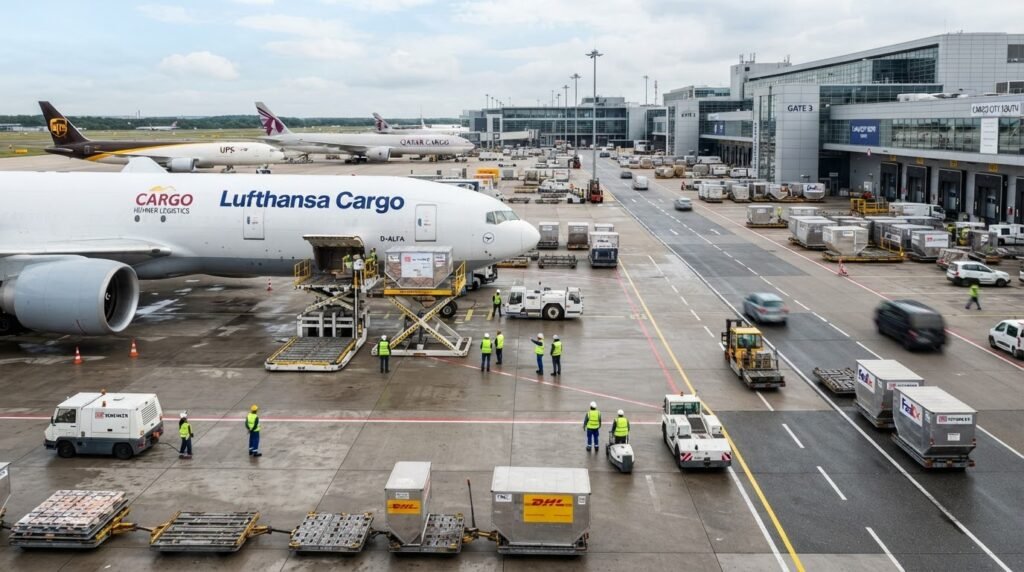
While maritime routes handle high-volume breakbulk and containerized cargo, air logistics provides the speed and flexibility required for high-value freight, pharmaceutical supplies, e-commerce, and perishable goods. The infrastructure blueprint for Nusantara relies on a dual-airport strategy leveraging existing assets alongside purpose-built facilities.
Sultan Aji Muhammad Sulaiman (SAMS) Sepinggan Airport in Balikpapan is undergoing significant modernizations to expand its dedicated cargo terminals and cold-chain capacity. Simultaneously, the newly developed VVIP and logistics-supporting airport facilities near the core government zone (KIPP) incorporate smart aviation technologies designed to reduce turnaround times and operational carbon footprints.
Key Infrastructure Milestones:
- Cold-Chain Integration: Temperature-controlled warehouses for agricultural and medical supplies.
- Smart Cargo Handling: IoT-enabled tracking and automated sorting systems to minimize transit delays.
- Carbon-Neutral Operations: Adoption of solar arrays, energy-efficient ground support equipment, and green building standards for airport freight hubs.
Discover the full timeline of airport upgrades, cargo capabilities, and green air logistics initiatives in our detailed guide:
Air Freight & Eco-Logistics Nodes in East Kalimantan: Infrastructure Milestones.
4. Sustainable Real Estate: The Rise of Green Warehousing
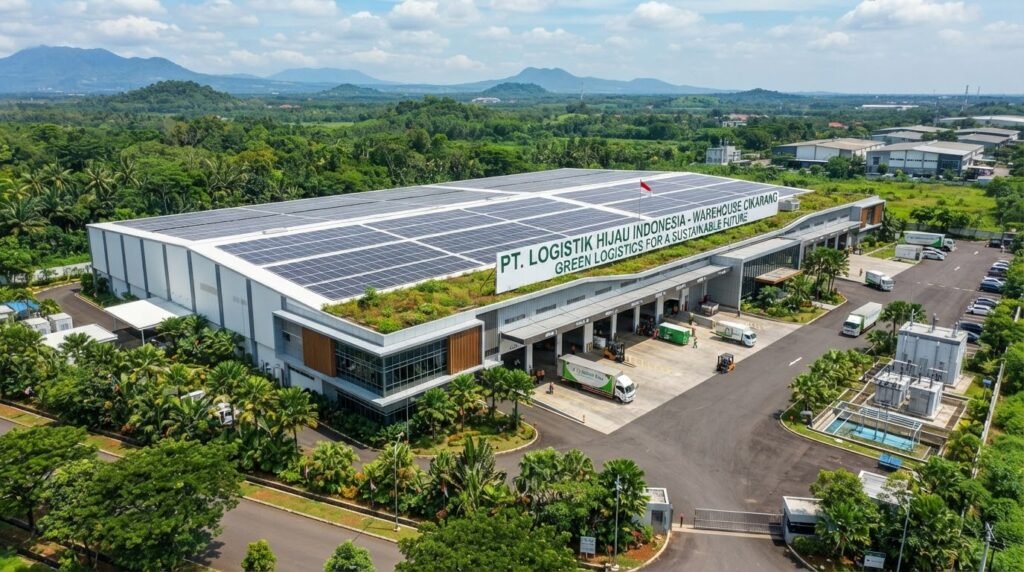
Nusantara is explicitly designed under a “Forest City” paradigm, targeting net-zero carbon emissions by 2045. Consequently, conventional, carbon-intensive industrial real estate models are being phased out in favor of eco-certified industrial parks and green warehousing practices.
Logistics operators entering the East Kalimantan market must adapt to stringent environmental regulations. Modern warehousing units across the Balikpapan-Samarinda corridor are increasingly featuring renewable energy generation (roof-mounted solar PV systems), rainwater harvesting, natural ventilation designs, and low-emission building materials. These sustainable facilities not only align with municipal regulatory mandates but also reduce long-term operational expenditures for multinational tenants prioritizing ESG (Environmental, Social, and Governance) compliance.
Explore commercial investment opportunities, green building certifications, and sustainable logistics real estate trends here:
Green Warehousing Opportunities in Indonesia’s New Administrative Hub.
5. Multimodal Integration: The Key to Supply Chain Resilience
A major bottleneck historically faced by developing trade networks is modal fragmentation—where sea, air, and land transport systems operate in silos. Nusantara’s Master Plan addresses this challenge by embedding **multimodal integration** directly into its regional infrastructure design.
The Balikpapan-Samarinda Toll Road (Balsam), Indonesia’s first highway on the island of Borneo, serves as the primary terrestrial artery connecting seaports and air hubs to the core capital zone. Moving forward, planned freight railway networks and dedicated logistics corridors will bridge heavy industrial zones directly with maritime ports, drastically reducing turnaround times and lowering first-mile/last-mile logistics costs.
| Transport Mode | Primary Strategic Function | Key Infrastructure Anchors |
|---|---|---|
| Maritime Freight | High-volume, international bulk, and heavy construction logistics | Kariangau Port, Palaran Port, Makassar Strait Lanes |
| Air Logistics | High-value, time-critical, e-commerce, and cold-chain supply | SAMS Sepinggan Airport, IKN VIP/Cargo Airport |
| Terrestrial Arteries | Intra-island regional distribution and construction haulage | Balikpapan-Samarinda Toll Road, Regional Arterial Routes |
6. Strategic Implications for Global Investors and Logistics Operators
The transformation of East Kalimantan into a global logistics nexus presents significant long-term opportunities for international investors, third-party logistics (3PL) providers, and industrial developers. As Nusantara transitions from its foundational construction phase toward full operational status, demand for integrated logistics services will expand exponentially.
Companies that establish an early operational footprint in East Kalimantan stand to gain first-mover advantages in serving not only the new capital’s population, but also the broader 100-million-strong consumer market across Eastern Indonesia and the BIMP-EAGA (Brunei Darussalam-Indonesia-Malaysia-Philippines East ASEAN Growth Area) economic zone.
Key Action Points for Supply Chain Leaders:
- Evaluate Regional Network Configurations: Re-assess Indonesian distribution networks to utilize East Kalimantan as a primary northern distribution hub alongside traditional Java hubs.
- Invest in Green Technology: Prioritize ESG-compliant fleet assets, eco-friendly warehousing, and digital tracking software to seamlessly align with Nusantara’s sustainability mandates.
- Form Strategic Local Partnerships: Collaborate with local logistics operators and port authorities to navigate regional regulatory frameworks and expedite market entry.
Conclusion: Nusantara as a Catalyst for Asian Trade Networks
The development of Nusantara Capital is more than a administrative project; it is a fundamental restructuring of Indonesia’s national trade geometry. By anchoring supply chain infrastructure along the Makassar Strait, expanding multimodal transport capacity, and enforcing green logistics standards, Indonesia is positioning itself as a central player in regional and global commerce.
For supply chain executives, real estate developers, and international trade operators, understanding and adapting to this tectonic shift in East Indonesia’s logistics ecosystem is no longer optional—it is a vital imperative for long-term competitiveness in Southeast Asia.