
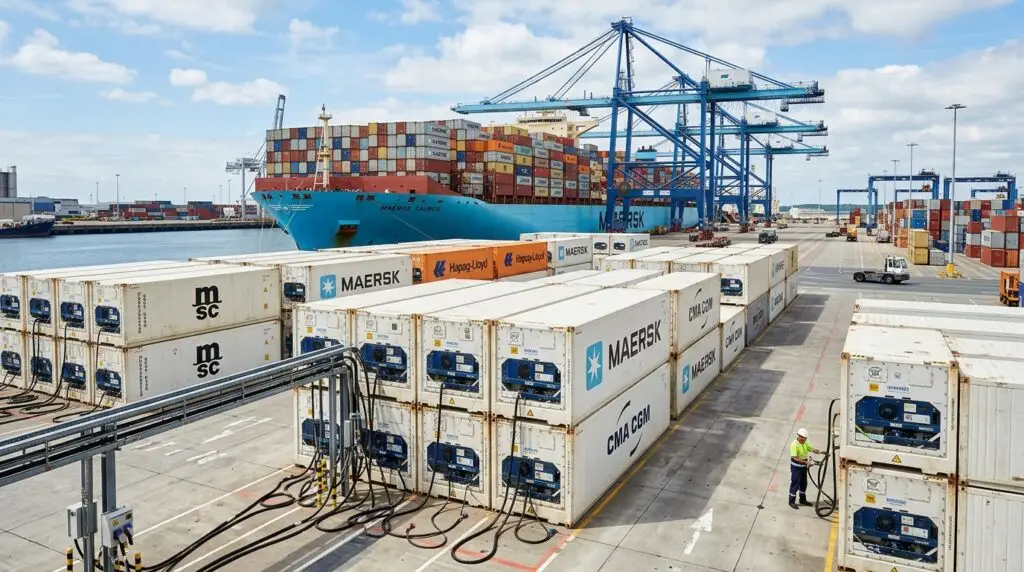
As the world’s largest archipelagic state, Indonesia possesses vast marine biological resources, placing it among the premier global producers of wild-caught fish, shrimp, tuna, and seaweed. Despite this immense natural yield, the country historically struggled to maximize the economic value of its seafood exports. A primary driver of lost export value was the lack of continuous, end-to-end cold chain infrastructure at primary maritime gateways and regional fishing hubs. Temperature-sensitive seafood products require uninterrupted refrigeration from the moment of harvest at sea, through port handling and customs clearance, until final overseas delivery.
To eliminate post-harvest losses, maintain stringent export quality standards, and capture high-value overseas markets, Indonesia has prioritized cold chain development across key maritime terminals. By installing specialized reefer container yards, constructing temperature-controlled processing and cold storage facilities directly within port perimeters, and streamlining export inspection lanes, the national maritime sector is undergoing a major structural transformation. These cold chain infrastructure investments are directly unlocking the full economic value of Indonesia’s marine resources, ensuring seafood exports reach international consumers in optimal condition.
The Critical Role of Cold Chain Integrity in Seafood Exports
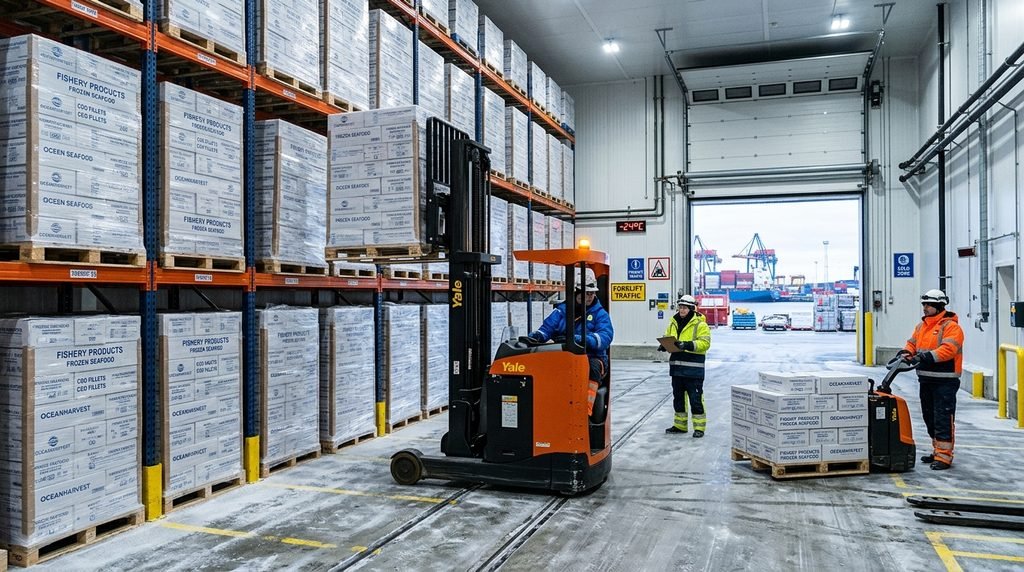
Seafood products are highly perishable commodities with limited shelf lives that degrade rapidly when exposed to temperature fluctuations. Maintaining a continuous cold chain—typically requiring strict temperature maintenance ranging from -18°C for standard frozen seafood down to -60°C for ultra-low temperature sashimi-grade tuna—is essential to preserve texture, nutritional integrity, and biological safety.
Prior to targeted port-side cold chain investments, fragmented logistics networks led to significant post-harvest losses, occasionally exceeding 20 to 30 percent of total harvest volumes in remote regional fisheries. Traditional transport methods lacked sufficient refrigerated container (reefer) plugs at regional docks, forced long transit waits in unconditioned holding zones, and relied on manual inspection processes that delayed export clearances. Breaks in the cold chain resulted in downgraded product quality, rejected shipments at destination ports in Europe, Japan, and the United States, and lower profit margins for local fishing communities.
To discover how cold chain expansion integrates into the national roadmap for port modernization, read our core overview on Modernizing Indonesia’s Ports: Gateways for Global Trade and Investment.
Core Pillars of Port-Side Cold Chain Infrastructure
Building a robust, export-oriented marine cold chain requires deploying specialized hardware, dedicated storage capacity, and accelerated regulatory processes within coastal port terminals. The modernization strategy focuses on four primary infrastructure components:
| Cold Chain Infrastructure Component | Technical & Operational Specifications | Primary Impact on Seafood Export Growth |
|---|---|---|
| Reefer Container Plug Capacity | High-density electrical monitoring points at container yards | Ensures continuous power for refrigerated export containers awaiting ship loading |
| Port-Side On-Site Cold Storage | Multi-temperature automated cold storage facilities near docks | Reduces transit delays and provides buffer storage for high-volume harvest seasons |
| Express Green Lanes for Perishables | Prioritized customs and sanitary-phytosanitary (SPS) inspections | Minimizes terminal dwell time for temperature-sensitive cargo |
| Intermodal Reefer Logistics Connectivity | Refrigerated trucks and specialized feeder vessels with generator sets | Maintains cold chain integrity from remote fishing ports to major export gateways |
1. Expansion of Reefer Container Plugs and Yard Infrastructure
Modern container terminals must accommodate large volumes of refrigerated containers simultaneously. Expanded terminals at key marine ports—such as Bitung, Makassar, Tanjung Perak, and Tanjung Priok—have significantly increased their dedicated reefer plug installations. Continuous, monitored electrical infrastructure ensures that reefer containers maintain precise target temperatures while staged in port yards prior to vessel loading.
2. Coastal On-Site Cold Storage and Processing Centers
Developing temperature-controlled warehouses and cold storage processing units within or directly adjacent to port gates eliminates long-distance transport bottlenecks between off-site processing plants and container terminals. Port-side cold storage allows seafood processors to consolidate, inspect, package, and containerize frozen marine products in a temperature-controlled environment, dramatically lowering exposure risks.
3. Expedited SPS and Quarantine Green Lanes
Physical cold storage must be matched with rapid administrative processing. Through collaborative agency protocols, regulatory bodies conduct joint sanitary and phytosanitary (SPS) inspections using prioritized “green lanes” for perishable goods. Rapid laboratory sampling, electronic health certification, and automated customs release protocols ensure seafood containers move swiftly from storage yards onto outbound ocean liners.
Digital trade portals play a vital role in accelerating perishable cargo clearance. Learn how administrative workflows are streamlined under our guide on Streamlining Port Infrastructure Under the National Logistics Ecosystem (NLE).
Strategic Geographic Distribution: Linking Regional Fishery Hubs
Indonesia’s cold chain expansion strategy focuses heavily on eastern regional maritime gateways positioned near primary Fishery Management Areas (Wilayah Pengelolaan Perikanan or WPP):
Bitung Marine Terminal (North Sulawesi)
Strategically located near rich tuna fishing grounds in the Pacific Ocean, Bitung serves as a primary northern export hub. Expanding port-side cold storage and direct shipping access in Bitung enables local processors to export high-grade tuna directly to major markets in East Asia and North America without rerouting through Java.
Makassar New Port (South Sulawesi)
As the central logistics hub for eastern Indonesia, Makassar consolidates seafood harvests—including shrimp, octopus, and reef fish—from Sulawesi, Maluku, and Nusa Tenggara. Deep-water capabilities combined with vast reefer storage facilities position Makassar as an ideal consolidation point for direct international seafood shipments.
Deep-water berths at strategic hubs allow direct mainline carrier calls for seafood exports. Read more about capacity upgrades in Deep-Sea Port Expansion: Positioning Indonesia as a Regional Transshipment Hub.
Ambon and Muara Baru (Maluku and Jakarta)
Upgrading cold infrastructure at strategic coastal centers like Ambon in Maluku and Muara Baru Fishery Port in Jakarta strengthens both regional collection and major metropolitan processing networks, creating a resilient nationwide cold chain grid.
Socio-Economic Benefits for the Maritime Economy
Establishing modernized port-side cold chain networks yields broad socio-economic advantages across the national fisheries value chain:
- Higher Export Earnings: Maintaining premium freshness allows exporters to command top-tier pricing in competitive international seafood markets, boosting national foreign exchange reserves.
- Empowerment of Local Coastal Communities: Reducing post-harvest fish spoilage ensures small-scale and commercial fishers receive fair market value for their total catch, boosting incomes across coastal populations.
- Attraction of Foreign Value-Add Investments: Global seafood processing enterprises are increasingly investing in Indonesian processing plants located near modernized cold chain port facilities.
- Compliance with Strict Foreign Standards: Unbroken cold chain records help Indonesian exporters seamlessly meet rigid food safety certifications required by regulatory bodies in the European Union, Japan, and the United States.
Challenges in Cold Chain Logistics Scaling
Sustaining and scaling cold chain infrastructure across thousands of islands requires overcoming persistent operational hurdles:
- High Energy Consumption and Costs: Maintaining refrigerated storage demands continuous, uninterrupted power supplies. Integrating green energy systems, such as solar panels and energy-efficient compressors, is critical to managing operational costs.
- Intermodal Rural Gaps: Ensuring small feeder vessels operating in remote outlying islands have adequate generator capacity and cold boxes to preserve catches during initial transit to major port hubs.
- Equipment Capital Expenditure: The high initial purchase and maintenance costs of reefer containers, automated cold storage systems, and monitoring hardware demand strategic private-public partnerships.
Conclusion
Developing modernized cold chain infrastructure at key maritime terminals is a pivotal driver in transforming Indonesia’s marine wealth into sustained economic growth. By expanding reefer yard capacity, establishing port-side cold storage, and digitizing clearance protocols for perishable goods, Indonesia is eliminating post-harvest losses and securing premium pricing in global seafood markets. As cold chain hubs expand throughout eastern Indonesia and integrate seamlessly with deep-sea trade routes, the nation is establishing itself as a world-class exporter of high-quality, sustainable marine products.